A sustainable innovation framework for rebalancing agrifood value chains
Summary
Ploutos created opportunities for change that could rebalance the value chain of the agri-food system towards a more environmentally, socially and economically sustainable system.
Until recently, agri-food system approaches focused on narrow segments of the overall value chain.
Ploutos adopted a systemic approach that analyzed the overall impact of changes at any point in the value chain, thus enabling a more complete and deeper understanding. To do so, Ploutos used the Sustainable Innovation Framework.
Ploutos developed
a reusable approach to guide the design, evaluation, engagement and implementation of business
and implementation of business models that address the complexities of the agri-food ecosystem.
complexities of the agri-food ecosystem
Target
The project created more environmentally, socially and economically sustainable opportunities in the agri-food sector.
This procedure required new ways of thinking, working and cooperating. This systemic approach refers to the project as the Sustainable Innovation Framework and its main objective is to provide a set of tools for assessing and adapting to these changes according to its three dimensions: behavior, collaborative business model and data-driven technological innovation.
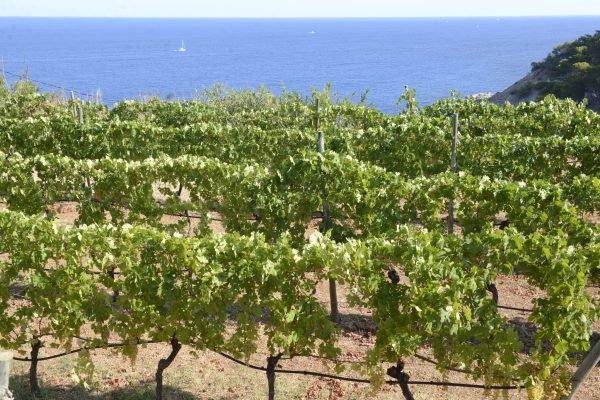
Sustainable innovation pilot developed in Mallorca
The Balearic Islands region, renowned for its tourist environment, is home to a rich agricultural tradition that contributes significantly to its economy. In this context, the introduction of advanced technologies in the agri-food sector is crucial to increase the efficiency and sustainability of agricultural operations.
IoT solutions were introduced through the NADIA platform in the agri-food sector in the Balearic Islands. This platform developed by AnySolution is designed to optimize agricultural processes, improving decision making through the use of real-time data collected by sensors deployed in the fields.
Among the expected benefits were:
Improved agricultural productivity by optimizing resources and reducing waste.
Environmental sustainability through more efficient management of water and other inputs.
Reduced operating costs by minimizing unnecessary use of resources.
Informed decision making based on accurate and up-to-date data.
The adoption of IoT technologies through the NADIA platform has the potential to transform the agri-food sector in the Balearic Islands.
Other pilots developed by project partners
Sustainable Innovation Pilot 1 - Greece
Sustainable Innovation Pilot 2 - Italy
Sustainable Innovation Pilot 3 - France, Greece, United Kingdom, Germany, Belgium, Germany, Belgium